

It’s Electric. It Also Has to Be Effective.
On first-mile belief, ritual, and the pitstops on road to a renewable future
By Cameron Colan
A friend and I drove halfway toward Rome from Naples in an electric car that didn’t get us where we wanted to go.
We’d done all the right things to get in the car and head north to Tivoli. He had some status with Hertz. We booked in advance. Yet at the desk beneath the Naples train station, two men were enthusiastic about giving us something different, a new all electric Jeep Avenger.
We asked the obvious questions. How do you charge it? Where do you charge it? What is the range really like?
They waved us off with confident Neapolitan hand gestures that half insinuated no matter what you say this is what you are getting. But sugar coated it all with “It will be fine! It is only 214 kilometers. Trust us!”
On paper, the math checked out. The car showed nearly 400 kilometers of range. In real life, the numbers turned out to be only part of the story. Neither of us had ever driven an electric vehicle as our primary mode of transport before. We’re New Yorkers. We ride trains and bikes and occasionally drive hand me down cars good for street parking. Driving in an electric car felt nice and easy enough. Getting it to our destination turned out to be something else entirely.
My friend pressed the ignition and looked at me. “It does not feel like it is on.” There was no engine sound and no idling feeling. I off handedly explained that it was on. It wouldn’t feel the same because it’s just a big battery.
I didn’t yet understand how literal that passing explanation would become.
We merged onto the highway heading north. Ten minutes in, he pointed at the dashboard. The battery was already down to 88 percent.
From there, the drive stopped feeling like an open road and started feeling like a countdown.
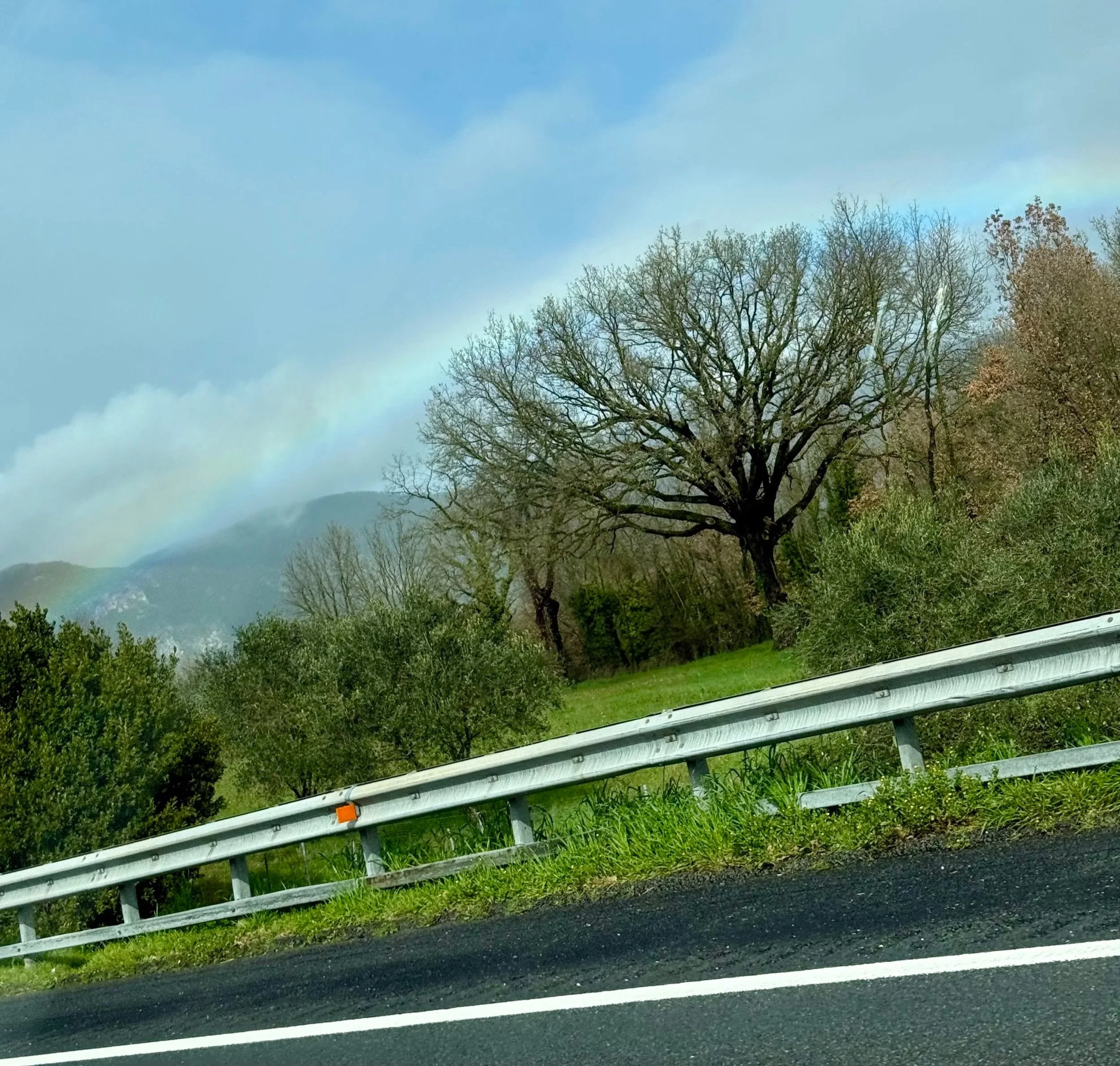
We eased off the pedal, coasting but still, the percentage kept dropping. Outside the window, three full rainbows stretched across the mountains to our right.
We barely noticed. Our attention kept drifting back to the gauge.
At around 50 percent, we did what decades of driving have trained us to do. We pulled off at an Autogrill. Stop. Refuel. Get a sandwich. Enjoy the surroundings. This is where we learned the difference: charging is not gas.
The station required an app. The app required access to the EU app store. Some chargers needed prepaid cards. One charger claimed to take credit cards but was already in use, with another car waiting behind it.
We waited. Ate our sandwiches. Tried to problem-solve. After thirty minutes, nothing worked. We got back on the road to look for another option.
The drive had become an exercise in balancing the stress the car was filling while its’ battery swiftly emptied. Behind the wheel now I focused on keeping the battery indicator in its narrow sweet spot, between ECO and CHARGE.
When we dropped below 20 percent, we exited the highway and followed Google Maps toward what it promised was the best charge option nearby. The road wound through gentle countryside that should have been beautiful. All we could think about was whether this giant iPhone would make it to its giant outlet.
We pulled into a small bus parking lot in a settlement called Carchitti with six percent battery. Relief left as quickly as it had arrived as the charger revealed its lack of function for us. Another private system. Another app. Another barrier we didn’t know existed until we were standing in front of it.
What followed were four slow hours.
Calls with roadside assistance. Repeated explanations. Conversations with curious strangers that couldn't understand how to help.
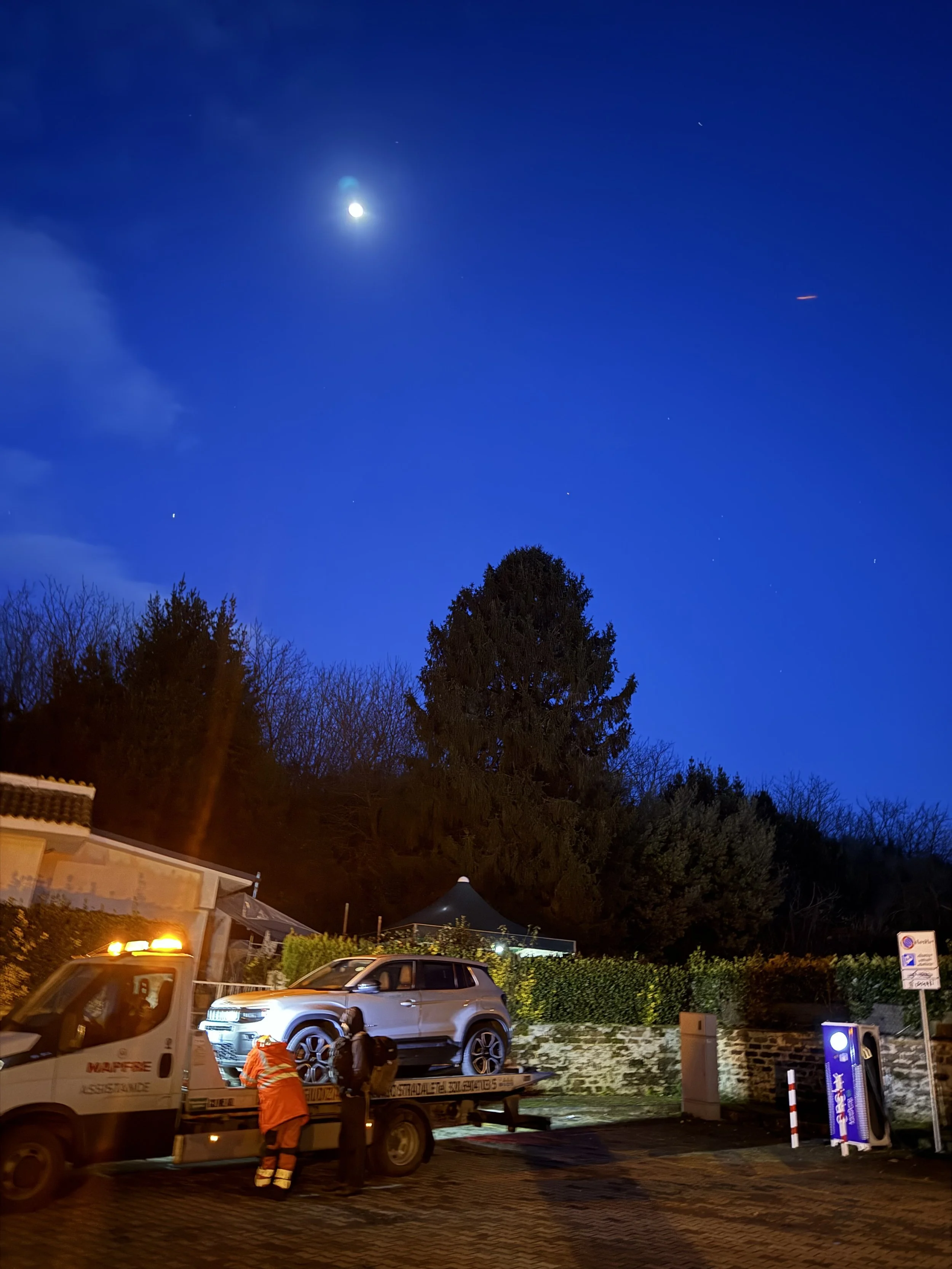
Eventually, a tow truck arrived. Even the driver couldn’t get the charger to work which brought with it a strange sense of relief, affirmation and disappointment all at once.
Birds filled the parking lot with sunsets song. Sunset gave way to a full moon. The Jeep was lifted away, and with it went the immediate problem.
We grabbed our bags and walked several unadvised miles along highway and forest to reach a train station that carried us back toward Rome. Tivoli appeared briefly in the distance, then slipped away.
On the train, exhaustion softened into comedy, then clarity. This didn’t happen because electric vehicles are broken but because the experience around them is.
Rental cars rest at a first-mile belief moment. You’re not buying the future. You’re borrowing it for a few days. And in that brief window, you assume someone has already thought through what you haven’t learned yet.
Nothing had prepared us for how this system actually works. When that happens, the technology takes the blame and belief hardens fast. By the end of the night, my friend said he’d never buy an electric car.
That sentence carries more weight than any range or savings statistic ever could.
Because belief is not formed at purchase, it forms the first time responsibility shows up.
When you rent a car, you’re just trying to get to where you’re going. Gas cars work here not because they are better, but because they come with decades of investment in education and shared habits around it. Everyone knows the rituals.
Electric driving asks people to learn a few new behaviors without being told what they are. That is where stress creeps in. Confidence drains faster than the battery, not because the task is difficult, but because the expectations are unclear.
The problem was never a charger. The problem was this education and ritual gap. That gap does not require new technology. It requires building on what people already know with a bit of guidance. That guidance could look like:
A short, country specific onboarding video explaining how the car behaves differently, what range actually means here, and how payment works.
A simple, reliable charger map that loads into whatever nav app you already use.
An option to grab a prepaid card before leaving the rental desk.
And a follow up message when you arrive at a station that reframes charging as a pause rather than a penalty. Step inside the cafe. Learn one small local fact. Point out something to notice that you’d have missed otherwise.
These small choices could remove friction before it has a chance to calcify.
We never made it to Tivoli that night. But the trip still took me somewhere wonderful. It showed me that the renewable transition is not waiting on better tech. It’s waiting on thoughtful first experiences that meet people where they are, build on what they already know, and make the road ahead open again.
